
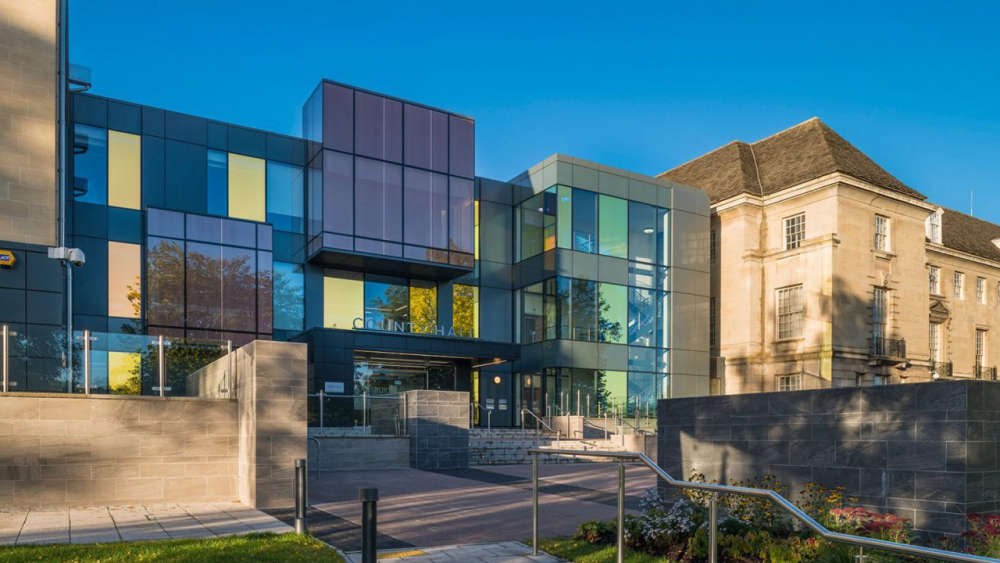
Wiltshire Council has provided its first formal financial update of the year - it is continuing to deliver key services while responding to the significant financial challenges facing local authorities across the country.
The council has published its quarter one budget monitoring position, which covers the period from 1 April to 30 June 2026. The update will be presented at the council's next Cabinet meeting on 16 September.
Against its budget of almost £568 million, which was a £40m increase on the 2025/26 budget, the council is currently forecasting an overspend of £6.7m at year end, which is equivalent to around 1.2% of its net budget. Some of this overspend reflects £1.2m of pressures that were not known when the 2026/27 budget was approved, including the final annual local government pay award for staff.
Budgets typically fluctuate throughout the year, and at the same point in the 2024/25 and 2025/26 financial years, Wiltshire Council was forecasting year end overspends of approximately £8.2 million and £6.5 million respectively, on overall budgets that were lower than the current one.
The council's corporate costs are forecast to be overspent by £2.95m at year end. These are council-wide financial pressures linked to central support services and include unforeseen inflationary pressures and other economic factors. The overspend is mainly due to some planned savings proving difficult to deliver and higher financing costs, adding further pressure to the council's budget.
Cost control measures implemented in the previous financial year continue, and they include the active management of vacancies to control staffing costs, challenging non-essential and discretionary spending wherever possible, and carefully reviewing orders, commitments and expenditure plans.
Across the council, some services are experiencing budget pressures because they are struggling to achieve the higher level of staff vacancies assumed when the budget was set. While vacancy management remains an important cost-control measure, several services need to maintain staffing levels to continue delivering essential services, creating additional pressure on salary budgets.
The Local Government Pay Award for council staff of 3.3%, which was confirmed last month (August), will be reflected in future financial forecasts. The council had originally budgeted on the basis of a 3% award. The council has also had to factor in the increased UK HMRC approved mileage rate for cars and vans travelling on council business at 55p per mile, which went up by 10p in April 2026.
Controlling the budgets of the council's biggest spend areas – adult's and children's care services, has historically been, and continues to be, challenging. However, despite significant national pressures, the council is currently forecasting a relatively small year end overspend of £688k in adult social care services.
The 2026/27 budget was rebased to better align funding with the true cost of delivering adult social care services, as historic allocations have not kept pace with rising demand, increasing complexity of need and inflationary pressures. The council's newly created Transforming Adult Social Care (TASC) programme is starting to see positive results.
TASC is the council's major adult social care transformation programme, focused on improving services, promoting prevention and early intervention, strengthening quality, and using technology and new ways of working to help people remain independent for longer. It continues to focus on ensuring services are delivered as efficiently as possible in what remains one of the council's most complex areas.
The council’s work to drive efficiency in children’s services while still providing vital services is proving to be effective. The council's assumptions regarding children in care are currently proving broadly accurate with residential placement levels remaining within target ranges and approved savings either already delivered or on track.
Like other education authorities across the country, Wiltshire faces ongoing uncertainty around future government arrangements for managing DSG deficits. Demand for SEND support continues to grow both locally and nationally, creating pressure within the High Needs Block of the Dedicated Schools Grant.
However, this pressure is currently offset by underspends elsewhere within the grant, meaning the overall DSG position remains in line with the council's approved financial plan. The council will continue to work closely with schools, partners and government to secure a sustainable long-term funding solution for children and young people with additional needs.
The council has also provided an update on its overall savings programme performance. It set a savings target of £27.7m in 2026/27, the largest in Wiltshire Council's history. At this stage of the financial year, more than £9.5m (34%) has already been delivered, with a further £10.2m (37%) expected to be achieved.
There is some uncertainty around whether the remaining £8m of identified savings can be fully delivered this year, although these programmes are being closely monitored.
However, the council will implement other mitigations in 2026/27 to cover off any of the original savings not delivered. The 2026/27 savings are already reflected in the revenue budget aligned to services and must be met in full or they will result in an overspent position by the year end, which will have a direct impact on the scale of savings to be delivered in future years.
The savings made so far are directly supporting keeping the overall forecast year end overspend at £6.7m.
Several of the council's income streams are performing strongly, with car parking income exceeding expectations, planning services remaining on target and council-owned solar energy installations providing extra income. These are helping to offset wider financial pressures across the organisation.
The council's outstanding sundry debt has reduced very significantly to £16.8m, a decrease of £22.4m since it was previously reported in December 2025. Sundry debt is money owed to the council for goods or services it has already provided.
This improvement follows enhanced debt recovery activity which includes £1m owed by developers, the introduction of a new income management system and improvements to invoicing and payment processes, helping to strengthen the council's cash position and overall financial resilience.
The council is also proposing to draw down funding as planned from a number of earmarked reserves. These were specifically set up to support projects and services that were previously approved for reserve funding. These include transformation programmes, children's services initiatives, employment and skills projects, school improvement activity and community support programmes.
The council has also provided an update on its Capital programme. The council originally planned to spend £260.4 million on capital projects this year, but after reviewing each project's timetable, it now expects to spend £218.5 million during 2026/27 on schools, highways, housing, leisure and community infrastructure.
Cllr Gavin Grant, Cabinet Member for Finance, said:
"There's always a lot to unpack in our quarter one financial position, and it provides an important snapshot of where we're headed and where we may need to make changes to drive even greater efficiency and value for taxpayers' money.
"In recent years the council's quarter one position has often included a forecast overspend, so while we're certainly not comfortable with this position, and are in no way complacent about it, we know forecasts can and do change throughout the year as we maintain a strong focus on our finances.
"An overspend, whether forecast or actual, is something we take very seriously, and my Cabinet colleagues and I will continue to work closely with senior officers and our hardworking staff to drive financial improvements. There are areas where we can and will do better.
"The continuing uncertainty surrounding the Dedicated Schools Grant will remain one of the biggest financial risks facing councils until government provides much-needed clarity on its long-term approach. However, I'm encouraged by the progress we're making in this area and by the positive response we've had from government so far on our plan.
"We remain a resilient council that is determined to build on the progress we're making. The work taking place across both children's and adult social care is beginning to deliver results, our income generation is performing strongly, and the amount of debt owed to the council has been cut considerably. We are also investing significantly in our capital programme, with a number of projects well on their way to contributing to a strengthened county that people want to visit, live, work and learn in.
"We're always looking to do things innovatively, such as through our Wiltshire Community Lottery where we've been able to support good causes to raise much-needed extra money, enabling even more community-focussed projects to happen throughout the county.
"Residents and local business fully expect us to spend their money carefully and efficiently. This early forecast demonstrates both the challenges we face and the progress we're making. We will continue to take the necessary action to ensure Wiltshire Council remains on a strong and sustainable financial footing, driving value for money while delivering the good quality services residents rightly expect."
The full Cabinet reports can be found at Meeting - Democratic Services - Wiltshire Council.
Before going to the next Cabinet meeting, the budget update will also be presented to the Finance and Procurement Select Committee on 10 September.
 Old Sarum & Longhedge Community Pantry Receive Over 1000 Donations via Amazon Wishlist
 Local Couple Celebrate 75 Years of Marriage
 Member Champions Dedicated to Ending Violence against Women and Girls Appointed by Wiltshire Council
 Officers Confiscate Illegal E-Bike
 Wiltshire Council urges parents to park safely and considerately outside schools
 Five Star Salisbury Thrash Struggling Slough
 New play by BAFTA-winning playwright leads spring theatre season