
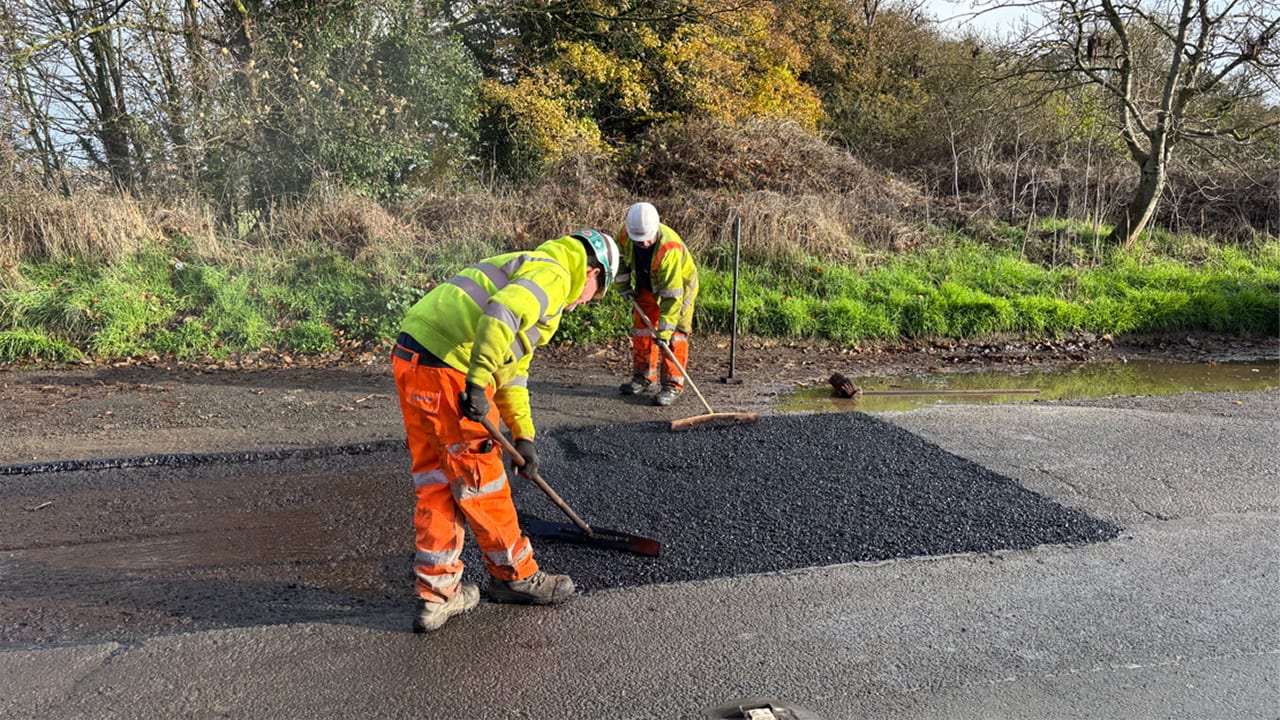
Wiltshire Council is reminding residents to report potholes through MyWilts, as a wet winter may cause potholes to form following the exceptionally dry summer.
Following the prolonged period of hot, dry weather, road surfaces across Wiltshire have developed cracks. As winter storms arrive, water can enter these cracks and then freeze, accelerating deterioration and increasing the likelihood of potholes forming.
Residents can help by reporting potholes through MyWilts and checking whether a defect has already been reported before submitting a new report. If it has, they can follow the existing report to keep track of progress.
Cllr Martin Smith, Cabinet Member for Highways, said: “Potholes are one of the issues residents contact us about most often, and as the wetter and colder weather continues, we want people to understand what causes potholes, how we prioritise repairs and what they can do to help.
“The hot, dry weather we experienced over the summer can cause roads to dry out and crack. When rain arrives, water can get into those cracks and then freeze, and the road surface can deteriorate more quickly, leading to potholes.
“We invest significantly in preventative maintenance to help keep our roads in good condition, as well as repairing potholes when they form.
“Residents can help us by reporting potholes through MyWilts and, if a pothole has already been reported, people can follow the existing report rather than submitting another, which gives our teams more time to focus on fixing potholes.
“We know just how passionate people are about potholes in Wiltshire, and we are directing all available resources to both preventing and repairing the county’s roads.”
When a pothole is reported to the council it is assessed and then scheduled for repair based on the priorities set out in the council’s Highways Inspection Manual. The assessment considers factors including the size and depth of the defect, its location, the type of road, traffic volumes and the risk it presents to road users.
Defects are then assigned a priority rating, which determines how quickly they should be repaired. The most serious defects are repaired, or made safe, by the end of the following day, while lower-priority defects are addressed within longer timescales.
This means potholes are prioritised according to the risk they present rather than the order in which they are reported. As a result, two potholes reported on the same day may have different repair timescales.
The council also carries out preventative maintenance throughout the year to help stop potholes forming in the first place. This includes resurfacing, surface dressing, patching and other treatments designed to extend the life of Wiltshire’s roads.
The council is projected to invest more than £38m in highways maintenance during 2026/27, and between September 2025 and September 2026 it repaired more than 15,700 potholes across the county.
Residents can report potholes, check existing reports and track progress at www.wiltshire.gov.uk/MyWilts.
 Annual Corporate Gala Quiz Raises Nearly £10k for Salisbury Hospice Charity
 Amesbury Fly-Tipper Caught on Camera and Issued with £1,000 Penalty
 Salisbury Drop Two Points in Cruel Fashion in Six-Goal Thriller
 Police Support Hundreds of Businesses During Week of Action Against Retail Crime
 Former ALABARÉ Client Publishes Book Documenting ‘Unheard Voices of the Unseen’
 Salisbury Cathedral to Present Brand-New Christmas Organ Extravaganza
 First £2,500 fly-tipping penalty issued as Wiltshire Council gets tougher on offenders
 Salisbury Playhouse Needs Your Nominations for National Theatre Awards