
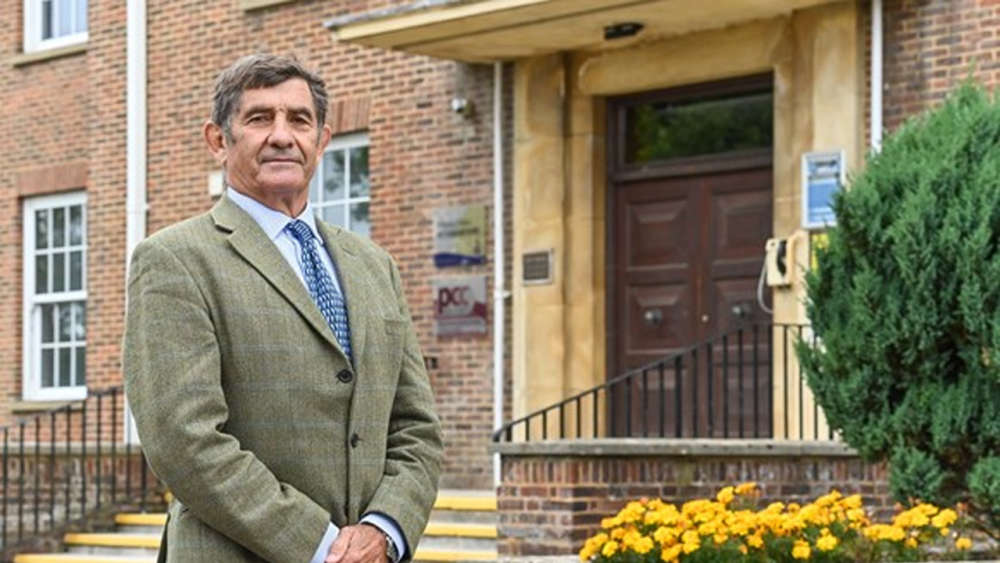
Wiltshire's Police and Crime Commissioner has voiced concerns that wide-ranging police reform will take away the public’s voice on policing - and end up costing more money without an uplift in local policing service or crime-fighting ability.
Mr Wilkinson said that despite the clear need for policing reform, and there was much in the paper he supported, the new planned police structure unveiled in the Home Office’s white paper will place unprecedented power at the centre.
He also stressed that big, regional and national, super forces would suck money from local communities and coupled with plans to merge local forces, and introduce local policing boards after the abolition of the PCC role, would mean local accountability is lost.
Mr Wilkinson said: “Policing needs reform and there is much in the white paper which I support including the standardisation of training, standards, procurement and national capability to tackle counter terrorism and serious organised crime.
"The emphasis on local policing and communities receiving a police service which serves their concerns has always been the emphasis of my police and crime plan and that of Wiltshire Police. This isn't new to us.
“However, bigger isn’t always better – being better is better. Creating large regional ‘super forces’ and shifting power to government risks swallowing funds, stripping away local accountability and weakening the community‑based policing that people rely on.
“Wiltshire already proves that small forces can deliver more with less. Despite receiving almost £100 less per head than the national average, the progress over the last 18 months shows what can be achieved. With proper funding we could achieve even more.
“Government should set out a clear, phased plan that moves functions to the most efficient level without the major disruption the current proposals would cause. It is unacceptable that forces still can’t share data or that every force buys uniforms, cars and equipment separately - these things should absolutely be standardised.
“But neighbourhood policing must stay local. It only works when shaped by communities and backed by genuine local accountability. Smaller, connected forces working with PCCs deliver this far better than distant mega‑forces or mayoral models. As Peel said, policing’s legitimacy comes from staying close to the people.
“Long‑term, reform should align with devolution, not introduce unnecessary, undemocratic, interim structures that dilute accountability and break the direct link between the public and their elected representative.
“The claimed savings from abolishing PCCs are fiction and these reforms will cost more, not less. We need guarantees that local taxpayers won’t be left paying for this government's experiment.
“My concern is that headline‑grabbing reforms are being pushed by a small group of senior leaders and a government keen to avoid democratic scrutiny - not backed by evidence or public need. These changes will cost tens of millions that should instead be invested in real improvements now, not in 2034.
“We all want faster response times, more officers on the beat and better shared systems but that comes from proper investment, not from removing local accountability and voice. There is a real risk that proposed new national layers will swallow funding and leave nothing for local policing.
“Reform should focus on efficiency, culture, standards and leadership, with clearer national consistency but never at the expense of strong local policing or local accountability. The public deserves a say in their policing and I will make sure their voice is heard.”
 Community Leader sought to Chair new £20m Pride in Place Neighbourhood Board for Bemerton
 New equipment for Salisbury Shopmobility
 Defeat on the road in Kent leaves the Whites hovering just above the relegation places
 Plans submitted to expand Salisbury hotel
 Salisbury Rugby Club launches player recruitment drive
 Driver banned after Salisbury crash case
 Rise in e bike and scooter fire incidents
 Sunrise services held across Salisbury